The Shared Roof Dividend: A High Street Energy Co-op Worth Trying
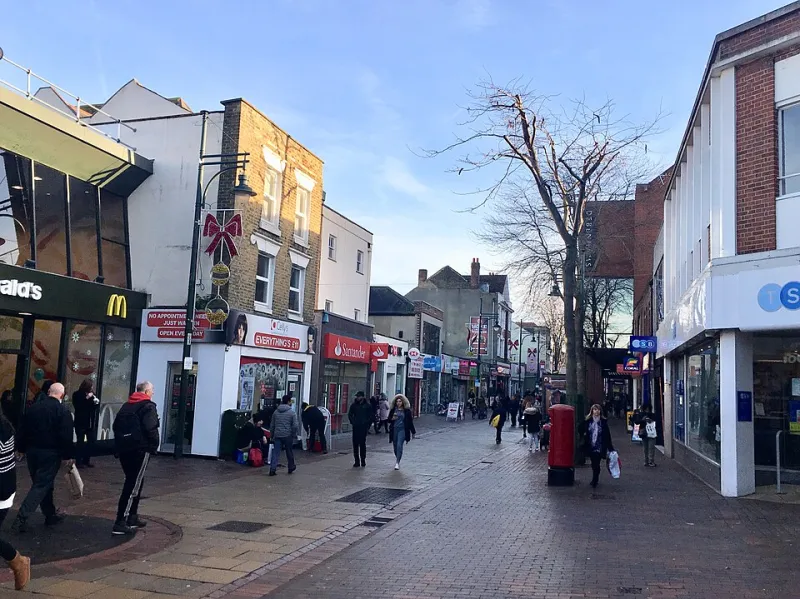
Photo: Chris Whippet , CC BY-SA 2.0, via Wikimedia Commons
The best place to start is not with a solar panel but with a parade. One independent shop rarely has enough roof, enough certainty or enough spare cash to make solar worth the trouble. Twenty shops in a row are a different proposition. Add a landlord or a council willing to act as broker, a local energy co-op with patient capital, and a standard lease that does not terrify either side, and the maths begins to work.
The idea is simple enough. A community benefit society leases roof space across a whole high street parade for 20 to 25 years. It raises money through community shares and social investment, installs the panels, and sells the electricity to the shops below at a discount to retail prices. The freeholder gets a roof rent. The tenants get lower bills without spending a penny upfront. Any surplus goes to a community fund or a capped return for members. The roof stops being dead space and starts being a quiet dividend.
Why one roof is rarely enough
A single shop roof is an awkward size. The survey costs the same whether you are fitting 10 kilowatts or 100. The scaffolding, the connection application and the legal work do not shrink to fit a corner shop. Most small firms also have short leases, which makes a 20-year investment feel like someone else’s problem.
A parade changes the economics. One co-op can appoint one installer, negotiate one lease template, arrange one maintenance contract and talk to the grid operator once rather than twenty times. The transaction costs are spread across a much larger scheme. That is the difference between a nice idea and a deliverable one.
The model in plain terms
The co-op is the owner of the kit. It takes a lease on the roof space, not the shop. Tenants sign a power purchase agreement that gives them a fixed discount on the solar electricity they use. If a tenant leaves, the agreement passes to the next occupier or the co-op sells the power elsewhere. The freeholder receives a modest rent and, importantly, does not have to fund the installation.
Community shares provide the bulk of the capital. A council loan, a social investor or a blended finance package can fill the gap while the co-op builds a track record. The society is registered with the Financial Conduct Authority and run on a one-member-one-vote basis, so local people have a say in how surpluses are used. That could mean a community fund, a fuel poverty project or simply paying members a modest return.
For the shopkeeper, the appeal is straightforward: no capital outlay, a lower bill and a landlord who is happier because the building has been improved. For the landlord, it is a small income from an otherwise idle asset and a stronger relationship with tenants. For the high street, it is a reason to look up.
The barriers are real but surmountable
The first obstacle is leasehold. A tenant cannot usually grant roof rights, and a landlord may worry about repairing obligations, insurance, forfeiture or what happens when the shop is sold. The answer is a standard roof lease with clear responsibilities: who fixes leaks, who insures the panels, who reinstates the roof at the end, and how disputes are handled. Councils and business improvement districts can help by publishing a template and explaining it in plain English.
The second is grid capacity. Distribution network operators are busy, and connection queues can be long. Aggregated applications are treated more seriously than a scattergun of small ones. The co-op should talk to the network operator early, check existing supply capacity and consider whether a private wire across the parade is feasible or whether each unit needs its own connection. This is where a good local energy officer earns their keep.
The third is finance. Community shares are patient but not unlimited. A co-op needs a credible business plan, a maintenance fund and a realistic view of electricity prices. It also needs to avoid the old rent-a-roof trap of overpromising. Solar is not a jackpot. For a parade of 20 shops, the income might be hundreds or low thousands of pounds per business per year, depending on roof size and usage. That is still useful. It is not a replacement for a business rates review.
A second income, not a second mortgage
The language matters. This is not about turning shopkeepers into energy traders. It is about giving small firms a modest, reliable benefit from an asset they already occupy. The co-op carries the technical risk and the upfront cost. The tenant gets a discount and a say. The landlord gets a rent and a better building. The community gets a fund and a visible piece of infrastructure.
There is also a social enterprise argument that goes beyond the pounds. A local co-op keeps the value in the area. Decisions about maintenance, pricing and community benefit are made by members, not by a distant utility. That matters if the goal is a high street that feels owned by the people who use it.
What councils and landlords can do next
The practical steps are unglamorous but cheap. Map the roofs. Publish a prospectus of viable parades. Standardise the lease. Bundle the grid applications. Underwrite the early surveys. Put roof rights into new commercial leases so the question is settled before a tenant moves in. None of this requires a new quango or a national strategy. It requires a few people who understand property, energy and paperwork.
The sunshine is free. The organisation is the hard part. But a parade-by-parade co-op is exactly the kind of social enterprise that could turn Britain’s high street roofs into a quiet, useful dividend, one row of shops at a time.