Town Hall, Not Term Sheet: The Case for Council-Run Venture Studios
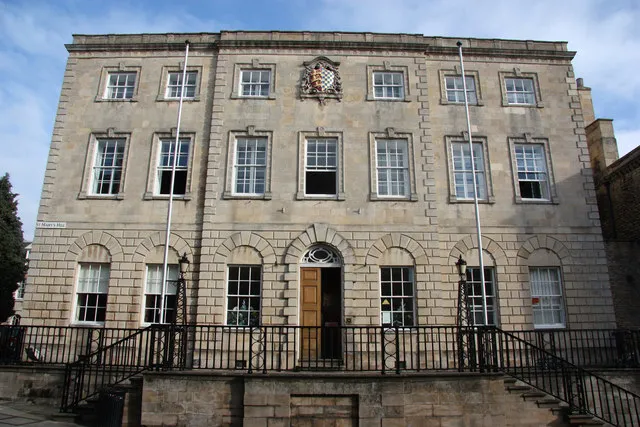
Photo: Richard Croft, CC BY-SA 2.0, via Wikimedia Commons
Local authorities are not short of problems to solve. They are short of ways to solve them that don’t involve another strategy document, another round of grant paperwork or another eye-watering outsourcing contract. The town hall venture studio is a third route: not grant-maker, not venture capitalist, but co-founder.
The idea is simple enough. A council partners with a small number of founders working on place-based problems — loneliness, food waste, retrofit, care navigation, whatever the local data says is stuck. Instead of writing a cheque and hoping, the council provides the things it already has: staff time, back-office functions, buildings, convening power and, crucially, a route to its own procurement budget. In return, it takes no shares. It earns a return through better services, avoided costs and local economic resilience.
The problem with grants and VC
Grant-making is good at starting things and bad at sticking with them. A community group gets £30,000 for a pilot, spends six months on monitoring returns, and then faces a cliff edge. The council has paid for activity but not necessarily for a business that can stand up. Venture capital is the opposite problem. It wants exits, exponential growth and a term sheet. Most social enterprises solving place-based problems want steady contracts, local jobs and a service that survives beyond the founder’s enthusiasm. A council that tries to act like a VC usually ends up with neither the returns nor the services.
The venture studio model sits between those poles. It is patient, but not passive. It puts public infrastructure behind a founder without pretending the public purse is a seed fund.
What a town hall venture studio actually looks like
Picture a mid-sized city — Plymouth, Derby, maybe Sunderland — with a council that has a decent economic development team, a few empty desks and a procurement budget it can actually control. In a 2026 pilot, the council would recruit four to six founders or small teams through an open process. The problems would be defined in advance: not ‘any good idea’ but ‘how do we get more people over 65 online’ or ‘how do we cut commercial food waste from the high street’.
Selected ventures would get a twelve-month package. That could include a council secondee for one or two days a week — someone from finance, HR, data or service design. It could include shared back-office support: payroll, safeguarding advice, contract management, GDPR templates. It could include a desk in a council building or a lease on a empty shop unit at a peppercorn rent. And it could include a procurement guarantee: if the venture hits agreed milestones, the council will buy a defined service for a defined period.
That last point is the real innovation. Procurement is the council’s biggest lever. A guarantee of, say, a £60,000 contract to deliver a food-waste collection service or a digital inclusion programme is worth more to a young social enterprise than a £60,000 grant. It is revenue, not a subsidy. It comes with a customer, a reference and a reason to hire.
Procurement as patient capital
The guarantee has to be real, not a vague promise. Under the Procurement Act 2023, councils have more flexibility to design contracts around social value and local outcomes, but they still have to follow the rules. The venture studio should not be a way to bypass competition. It should be a way to prepare ventures to compete — and, where the council is the only realistic buyer, to structure a contract with open-book pricing, break clauses and clear performance measures.
This is where the model beats both grants and venture capital for place-based problems. A grant buys activity. A VC cheque buys growth. A procurement guarantee buys a market. For a social enterprise trying to prove that a new service works, the market is the missing piece.
The governance bit
The obvious worry is that councils pick favourites, or get captured by a charming founder with a slide deck. That is a fair concern, and it needs a proper answer. The pilot should have an open application process, published criteria, an independent panel with external expertise, and staged commitments. No venture gets the full package on day one. Secondments and back-office support are released in phases. The procurement guarantee is triggered only by milestones that are verified by someone outside the founding team. There should be a conflict-of-interest register, a subsidy control check and a cross-party sign-off so the model survives a change of administration.
There is also a capacity risk. Council staff are already stretched. Seconding a finance officer to a social enterprise can feel like taking a seat from a lifeboat. The counter-argument is that the venture studio is a development function, not a service delivery function. It should be funded from economic growth and transformation budgets, not from adult social care. And it should be small. Four ventures is enough for a pilot. A council that tries to run twenty will drown.
Why it could beat the alternatives
The case for the town hall venture studio is not that councils should become founders in the Silicon Valley sense. It is that they should use the levers they already hold — buildings, contracts, back office, convening power — to help social enterprises get to their first hundred customers. That is less glamorous than a unicorn. It is also more likely to fix the bus route.
A 2026 pilot in a mid-sized city would not need new legislation or a new funding pot. It would need a council willing to say: we will not take equity, we will not write blank cheques, but we will be your first customer, your first landlord and your first reference. If that works, the return is not a financial exit. It is a service that stays open after the pilot ends, a local employer that hires locally, and a council that has learned how to co-found rather than just commission. That is a big idea worth testing.